
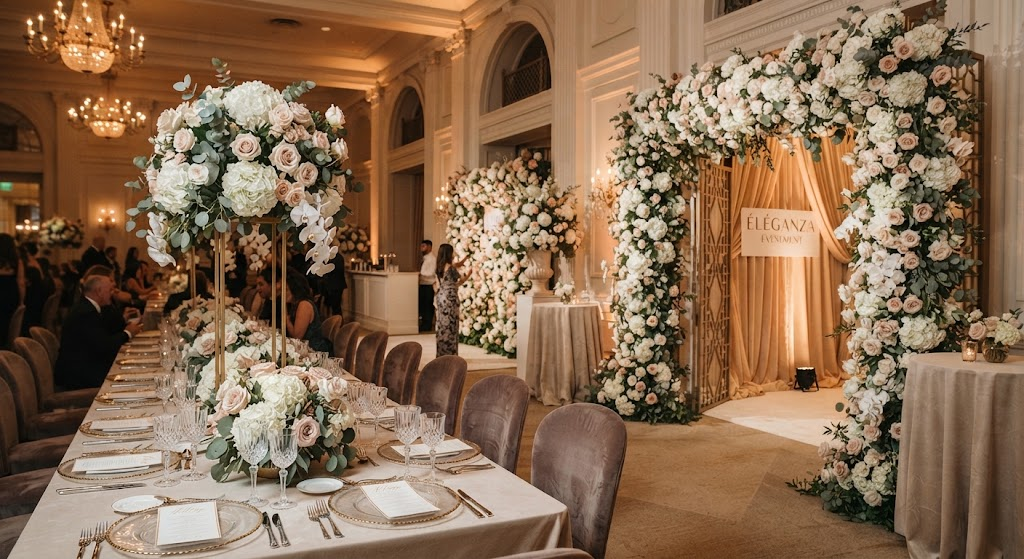
Floral design shapes how an event is experienced before guests take their seats: blooms at an entrance establish the mood, table arrangements create intimacy, and larger installations give the space a memorable visual anchor. A cohesive plan considers scale, sightlines, color, fragrance, venue conditions, and the practical demands of setup.
Designing Floral Arrangements for Tables, Entrances, and Focal Points
Floral Centerpieces do more than decorate a table: they influence its atmosphere and help define the wider Reception Decor. Muted roses with eucalyptus can create a soft, vintage impression, while orchids and ferns feel clean and contemporary. For a more textured design, dahlias with thistle or peonies with succulents offer contrast in shape and surface.
At the entrance, Event Entrance Flowers can frame a doorway, welcome guests at a reception desk, or mark the transition into the celebration. Larger Floral Installations, such as a flower-covered arch or suspended greenery, are most effective when they respond to the venue’s architecture rather than compete with it.
Positioning Table Arrangements for Comfort
Arrangement height affects both visual impact and guest interaction. Low designs, generally around 12–14 inches, preserve sightlines across the table; taller displays are better raised clearly above eye level, often 24–30 inches or more. If neither height suits the space, a narrow floral runner can add abundance while leaving the center of conversation unobstructed.
Table shape should guide placement. Round tables often suit one low centerpiece or a small cluster, while long banquet tables benefit from a runner or evenly spaced arrangements. Leave enough room for place settings, serving dishes, and candles: flowers should frame the meal, not crowd it.
Selecting Flowers, Containers, and Seasonal Color
Seasonal Blooms bring freshness and help a design feel connected to its setting. Spring arrangements may feature tulips and ranunculus; summer supports dahlias and hydrangeas; autumn lends itself to chrysanthemums and marigolds; and winter designs can combine amaryllis with cedar or pine. Local availability and the event date can influence the final selection, so consult a florist early. A practical guide to choosing flowers can also help clarify how varieties differ in appearance and suitability.
Containers contribute to the overall composition. Clear glass suits formal settings and keeps attention on the stems, while ceramic vessels and woven baskets add warmth to rustic or garden-inspired events. Modern metal or geometric containers complement structured designs, but the vessel should support the flowers rather than become a competing focal point.
Fragrance deserves as much consideration as color, especially at dining tables. Strongly scented flowers can interfere with food aromas, so restrained varieties and gentle foliage are often better choices for meal service. To build a balanced arrangement, combine blooms and materials with different forms and textures:
- Use one distinctive flower or cluster as the visual anchor.
- Balance rounded blooms with airy foliage or slender stems.
- Repeat selected colors or greenery to connect separate displays.
For broader event planning, floral choices can also be coordinated with lighting that shapes the room’s atmosphere. Candlelight and soft illumination can enrich greenery and pale petals, provided the venue permits open flames and the arrangements are positioned safely.
Creating Statement Arrangements and Floral Backdrops
Statement Arrangements work best when they have a clear purpose: marking a stage, framing a ceremony space, or drawing attention to a focal point. Floral Backdrops can provide a visual setting for speeches and photographs, while a garland of magnolia leaves or eucalyptus can define a table without blocking the room. In every case, Focal Point Design should make the most important area easy to identify.
Scale the installation to the venue’s ceiling height, access routes, and available support. Outdoor arrangements need stable containers and protection from wind; indoor displays should be kept away from heat sources and strong direct sun. Confirm who will transport, install, maintain, and remove each piece before finalizing the design.
Coordinating Floral Displays Across the Venue
Consistency does not require identical arrangements. Repeating a palette, foliage type, or container finish can link entrance flowers, table displays, and a backdrop while allowing each element to serve a different function. Ceremony flowers may also be repositioned at a reception or welcome table when the venue’s layout and timing allow.
Proper hydration and clean containers help fresh flowers remain presentable throughout the event. A florist can assess bloom durability, venue conditions, and installation requirements, then tailor recommendations to the occasion and its setting.


