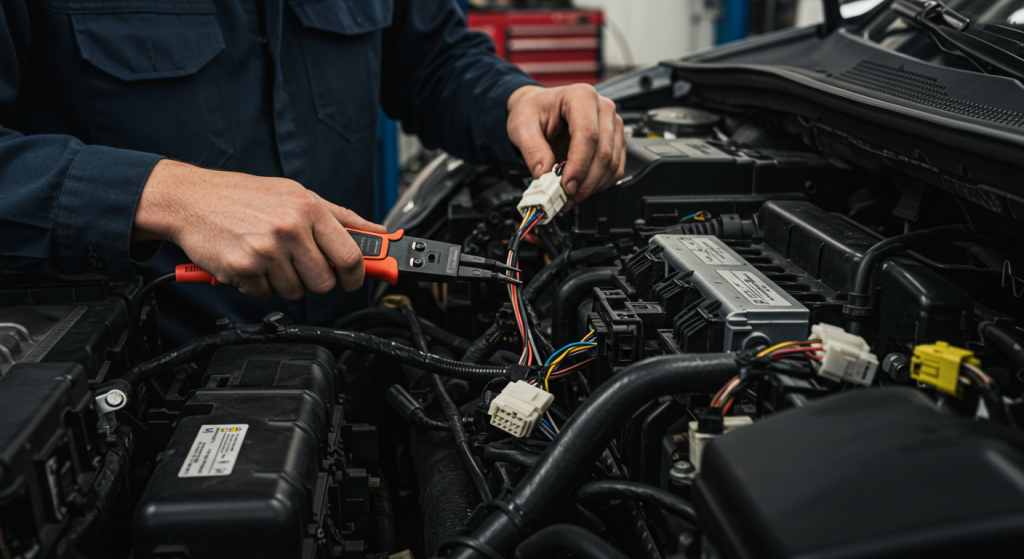
When it comes to car maintenance, understanding your vehicle’s electrical system can save you from inconvenient breakdowns and costly repairs. A blown fuse is a common issue that can lead to sudden electrical failures, affecting essential components like headlights, power windows, and your car’s radio. This article provides a comprehensive guide on diagnosing and fixing blown fuses in your vehicle, ensuring you have the right tools and knowledge for a DIY repair.
Understanding the Role of Fuses in Your Vehicle
Fuses are critical safety devices in a car’s electrical system. They act as a protective barrier, preventing excessive current flow that can damage electrical components. When a circuit experiences too much demand, the fuse relies on a thin metal wire inside it, which melts and breaks the circuit—hence the term “blown fuse.” Understanding the key components and functions of fuses is essential for diagnosing electrical issues effectively.
How Fuses Protect Your Electrical System
Every time you operate an electrical function in your car—whether it’s turning on the headlights or using the radio—that component connects to a specific fuse. This is why identifying a blown fuse begins with understanding which fuse corresponds to which component. The fuse works by ‘sacrificing’ itself to protect other parts when current exceeds its rated capacity, usually measured in amperes.
- Prevention of Damage: Fuses prevent excessive current that could lead to electrical fires or damage components.
- Easy to Replace: Unlike other electrical repairs, blown fuses are typically straightforward to replace.
- Identification: Each fuse is linked to specific electrical circuits, making it easier to diagnose issues.

Common Symptoms of a Blown Fuse
When a fuse blows, specific electrical functions in your car will stop working. Here are common symptoms that indicate a blown fuse:
| Symptom | Description |
|---|---|
| Radio Stops Working | If you notice silence where your music used to be, check the radio fuse. |
| Power Windows Fail | If your windows won’t budge, it could be due to a blown fuse linked to the window motor. |
| Exterior Lights Malfunction | If either headlights or taillights don’t turn on, the fuses may be faulty. |
By recognizing these signs early, you can promptly address the underlying problems without letting them escalate.
How to Check for a Blown Fuse
Identifying a blown fuse does not require advanced technical skills. Here’s a step-by-step guide on checking for a blown fuse in your car.
Visual Inspection Method
The simplest way to check if a fuse is blown is through visual inspection:
- Turn off your vehicle to avoid electrical mishaps.
- Remove the fuse from its slot using a dedicated fuse puller or needle-nose pliers.
- Hold the fuse up to a bright light to inspect the thin wire inside. If the wire is cut or broken, the fuse is blown.
- If the wire is connected and intact, the fuse is good.
Using a Multimeter or Test Light
For a more accurate diagnosis, you can use a multimeter or a test light. Follow these steps:
- Set the multimeter to the resistance (ohms) mode.
- Carefully place the probes on both sides of the fuse’s metal pins.
- A reading of 0.00 indicates the fuse is good; any other value suggests the fuse is defective.
These diagnostic tools can enhance troubleshooting in case replacing a blown fuse doesn’t resolve the underlying issue.
Replacing a Blown Fuse
Once you’ve determined that a fuse is blown, replacing it is straightforward. Below are steps on how to do it effectively.
Step-by-Step Replacement Process
- Ensure your car is off before replacing the fuse to avoid shorts.
- Insert the new fuse of the same amperage rating back into the correct slot.
- Make sure the fuse fits snugly. If it doesn’t, it could result in further electrical failures.
- Power on your vehicle and test the affected electrical component to see if it’s working.
Following these safety practices not only protects you, but also ensures that you don’t exacerbate existing electrical issues. Your vehicle’s harmony relies on a smooth electric flow, and maintaining this flow is essential for reliable performance and safety.
If you want to learn more about automotive diagnostics and maintenance, check out Guiseppe Auto Repair’s.