Driveways and parking areas occupy more than just space: their surfaces influence how rain moves through a property, how comfortable the site is to use, and how much upkeep it needs. Comparing permeable paving with traditional paving means weighing water infiltration and stormwater management against cost, climate, appearance, and long-term performance. Understanding those trade-offs helps property owners choose paving materials that suit both daily use and the surrounding landscape.
Permeable Paving and Traditional Paving: How They Differ
Driveways and Parking areas can use permeable paving, which allows water to pass through gaps between units or through a porous surface into a prepared layer below. Traditional paving, including conventional asphalt and tightly jointed concrete, generally directs water across the surface toward drains, channels, or lower ground.
Permeable Surfaces and Water Infiltration
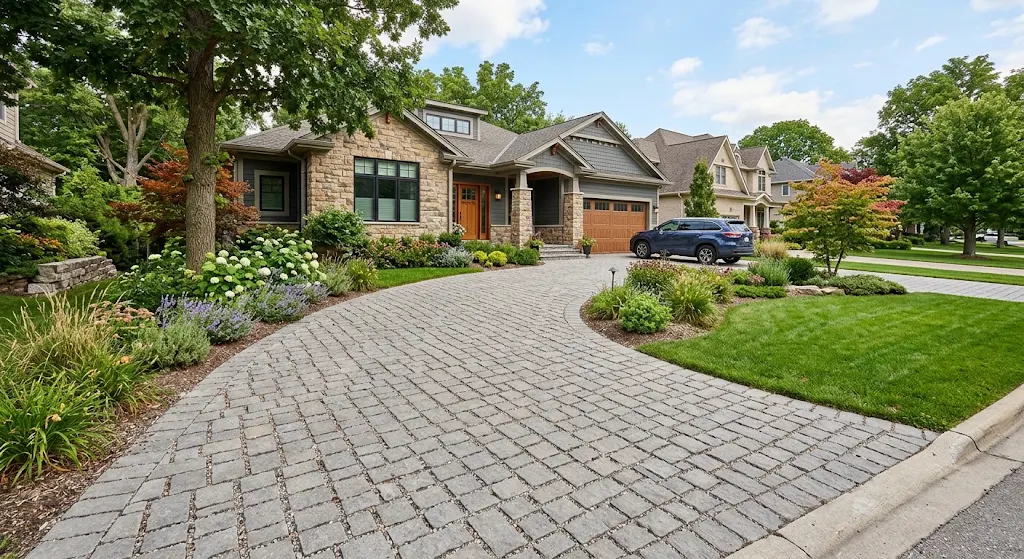
Permeable systems typically combine open joints or porous blocks with layers of aggregate that temporarily store rainwater. The water can then seep into the soil or be directed through an underdrain where local ground conditions require it. This approach can reduce surface runoff, helping limit puddling and pressure on drainage infrastructure.
Performance depends on the soil, system design, and installation. Clay-heavy or compacted ground may absorb water slowly, while sediment and debris can gradually obstruct open joints. Permeable paving is therefore not a universal substitute for drainage planning.
Traditional Surfaces and Drainage
Traditional paving offers a continuous, familiar surface that can work well for vehicles, frequent turning, and straightforward snow removal. Its main drainage challenge is that rain does not readily pass through it, so slopes and drainage features must guide water away from buildings and circulation routes.
For either option, sound grading matters: a surface that sends water toward a foundation can create problems regardless of its material.
Driveway Paving and Parking Areas: Comparing Practical Performance
Choosing between the two systems means looking beyond appearance. Traffic loads, local rainfall, accessibility, maintenance capacity, and the project’s drainage plan all shape the best fit.
Driveway Paving Under Everyday Use
For driveway paving, permeable blocks can provide a stable, repairable surface when the base is designed for vehicle loads. Individual units may be lifted and reset for utility repairs, although the joints need periodic attention. Traditional concrete and asphalt provide continuous travel surfaces, but cracks or settling can require more involved repairs.
In parking areas, the choice also affects runoff management across broad paved expanses. Permeable surfaces can be useful where water can infiltrate safely, while conventional paving may be preferable where heavy traffic, contaminated runoff, or difficult soil conditions call for controlled collection and treatment.
Paving Materials at a Glance
The following comparison highlights common differences; actual results depend on engineering, workmanship, and site conditions.
| Factor | Permeable Paving | Traditional Paving |
|---|---|---|
| Rainwater handling | Encourages infiltration and temporary storage | Directs runoff toward drains or grading |
| Suitable conditions | Needs a designed base and suitable drainage pathway | Can suit many sites with effective surface drainage |
| Routine care | Requires keeping joints or pores clear | Requires inspection for cracks, settlement, and drainage issues |
| Repairs | Individual units may be removed and replaced | Repairs may involve patching or resurfacing |
Stormwater Management and Sustainable Landscaping
Surface selection is part of a broader site plan. Pairing suitable paving with planted areas, rain gardens, or other drainage features can help manage water where it falls.
Site Conditions and Environmental Fit
Before selecting permeable paving, assess soil infiltration, groundwater levels, slopes, expected traffic, and nearby foundations. A qualified designer can determine whether water should soak into the ground, enter an underdrain, or be directed to another approved system. Where runoff may carry oil or other pollutants, treatment requirements may affect the design.
Traditional paving can still support responsible stormwater management when paired with well-planned grading and drainage. Meanwhile, permeable systems can complement sustainable landscaping by reducing the volume of water flowing directly across hard surfaces, provided their location and maintenance are appropriate.
Property owners considering runoff-reducing features can also review these residential driveway design considerations. The best approach is the one that responds to actual site conditions rather than relying on a material label alone.
Pavement Maintenance and Long-Term Planning
Maintenance expectations should be part of the decision from the outset. Permeable paving needs periodic removal of sediment and debris from joints or pores, using methods suited to the system; sealing or fine materials that block infiltration may undermine its function.
Traditional surfaces also need regular inspection for cracks, uneven areas, standing water, and failing drainage components. A maintenance plan that identifies small problems early can help preserve safe access and extend the useful life of either surface.
- Check local drainage rules and site soil before choosing a system.
- Match the base and surface to expected vehicle loads and traffic.
- Plan routine pavement maintenance, including drainage inspections.
Both permeable and traditional paving can serve driveways and parking areas effectively when design, drainage, and upkeep align. Consult a qualified paving professional for site-specific advice and specialized installation.