A garage door that opens but will not close properly can leave a home exposed and disrupt everyday access. The fault may lie in a blocked path, misaligned safety sensors, incorrect travel settings, or a problem inside the opener—not necessarily a failed motor. A careful, safety-first inspection can narrow down the cause and show when garage door repair calls for a technician.
Common Causes Of A Garage Door That Won’t Close
When a garage door opens normally but reverses, stops, or refuses to move downward, start with the simplest explanations. Modern systems use safety features to prevent the door from closing when they detect an obstruction or a sensor fault.
A track obstruction can be as small as a tool, leaf, or accumulation of grit. Inspect the full path, including the tracks and the floor beneath the door, before testing it again. Do not force the door down; resistance can indicate a mechanical problem.
Safety sensors, usually mounted near the floor on either side of the opening, transmit a beam across the doorway. Dirt on a lens, a loose bracket, or poor photo-eye alignment may interrupt that beam, causing the opener to reverse or prevent closure. Clean the lenses gently and check that both sensor indicators behave as described in the manufacturer’s manual.
Practical Garage Door Troubleshooting Checks
Once the doorway is clear and the sensors appear aligned, check the controls and settings. These basic steps can distinguish a simple signal issue from a fault that requires professional attention.
- Test the remote: Replace its battery and try the wall control to determine whether the problem is isolated to the remote.
- Check the power supply: Confirm that the opener is plugged in and inspect the relevant circuit breaker without opening electrical components.
- Observe the door’s movement: Uneven travel, scraping, or a sudden reversal may point to binding, worn parts, or an incorrectly set closing limit.
- Consult the manual: Models differ, so use the manufacturer’s guidance before changing settings or reconnecting controls.
If the door closes partway and then reverses despite a clear path, the opener’s travel limits may need attention. Limit switch adjustment sets how far the door moves before stopping; an incorrect closing limit can make the system interpret normal contact with the floor as an obstruction. Adjustments vary by model, so follow the specified procedure rather than turning controls at random.
For broader information on how garage systems fit into home access and security, see these advanced garage solutions. However, general guidance should not replace the opener’s own instructions when settings or wiring are involved.
Mechanical And Electrical Faults
Not every closing failure comes from the sensors or settings. A strained closing mechanism, damaged track, frayed cable, or failing opener component can prevent smooth travel and may worsen if the door is repeatedly operated.
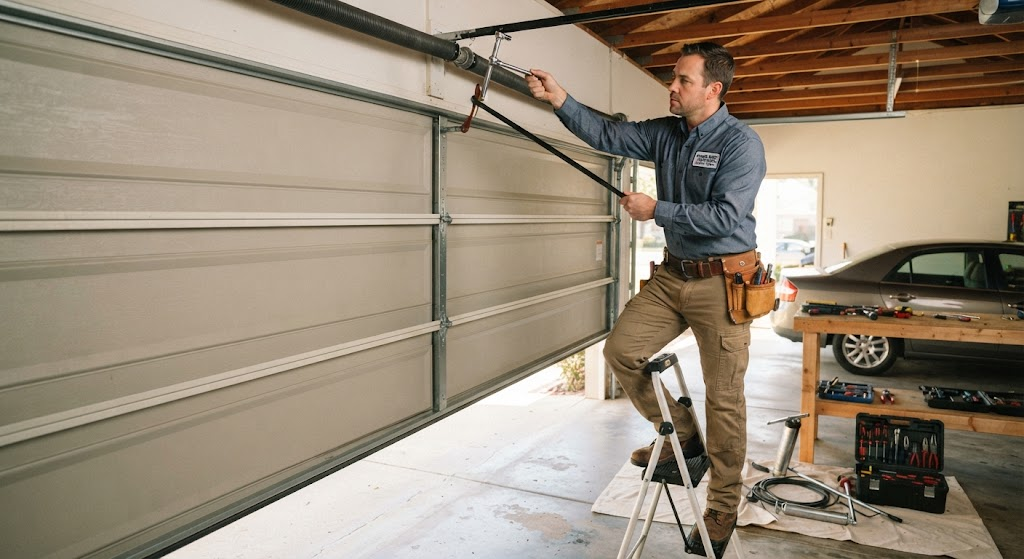
Listen for grinding, humming, or unusual impacts, and look for visible damage without removing covers or dismantling the assembly. A door that hangs unevenly or feels unusually heavy may have a spring or cable problem. These components can hold substantial tension, so attempting a do-it-yourself replacement can cause severe injury.
The following distinctions help guide a safe response:
| Observed Symptom | Possible Cause | Appropriate Next Step |
|---|---|---|
| Reverses near the floor | Sensor interruption or travel-limit issue | Clear the path, clean sensors, consult the manual |
| Moves unevenly or appears tilted | Track, cable, or spring damage | Stop operating the door and request service |
| Opener is unresponsive | Power, control, or electrical fault | Check basic power; avoid exposed wiring |
Maintenance And Professional Repair Decisions
Routine care can reduce avoidable failures: keep tracks clear, inspect visible hardware, and use lubricant only where the manufacturer recommends it. Test the reversal and sensor functions periodically according to the manual; never place hands or objects beneath a moving door to check its force.
For additional context about home garage systems, this overview of garage features and solutions may help clarify how components work together. If basic checks do not resolve the fault—or if springs, cables, wiring, or structural parts appear damaged—a professional repair service can diagnose the system and restore safe operation. A qualified technician is the right choice whenever the repair involves high-tension parts or uncertain electrical faults.