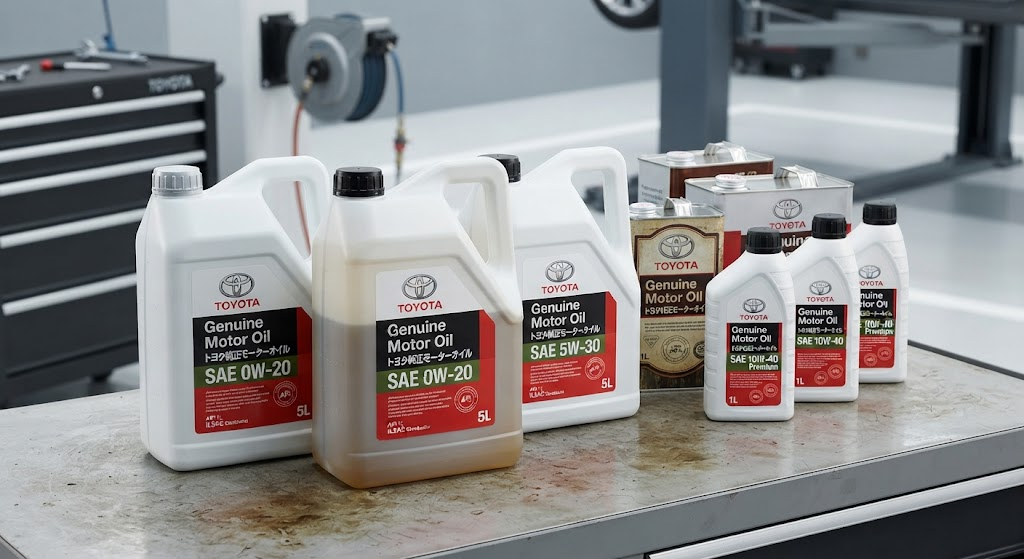
Toyota engine oil viscosity affects how quickly lubricant reaches moving parts during a cold start and how well it maintains a protective film once the engine is hot. Grades such as 0W-16, 0W-20, 5W-20, and 5W-30 describe defined viscosity behavior—not a universal ranking of oil quality or suitability. Understanding the numbers helps explain why a low-viscosity oil can support efficient operation in a specifically designed engine, while the wrong grade may not meet its lubrication requirements.
Motor Oil Viscosity And SAE Viscosity Grades
Motor oil viscosity is the lubricant’s resistance to flow. SAE viscosity grades classify oil under standardized low- and high-temperature tests; API and ILSAC categories address separate performance requirements. These systems work together, but one cannot substitute for the other.
In a multigrade label such as 5W-30, the number before “W” relates to cold-temperature performance, and “W” stands for winter. The number after the hyphen indicates the oil’s viscosity range at elevated operating temperatures. Neither figure is a direct measure of overall oil quality.
For a concise reference, the grades below illustrate how the two parts of a label differ. They are not recommendations for every Toyota model.
| Grade Example | Cold-Temperature Rating | Operating-Temperature Grade |
|---|---|---|
| 0W-20 | 0W classification | 20 |
| 5W-20 | 5W classification | 20 |
| 5W-30 | 5W classification | 30 |
| 10W-30 | 10W classification | 30 |
Cold-Start Performance And High-Temperature Protection
At startup, oil must circulate through narrow passages and reach bearings, valve mechanisms, and other moving components. A lower winter-grade number indicates that the oil meets a more demanding cold-flow classification, which can aid cold-start performance; it does not mean the oil is universally preferable in every climate or engine.
Once the engine reaches normal temperature, the second number becomes relevant to the grade’s viscosity range. For example, 5W-20 and 5W-30 share the same winter grade, while 5W-30 and 10W-30 share the same operating-temperature grade. The thinner operating-temperature grade can reduce flow resistance, but engine design determines the required balance with high-temperature protection.
Modern engines may use narrow oil passages and components engineered around specific lubricants. Choosing a grade solely for perceived fuel economy or unusually hot weather can therefore undermine the intended engine lubrication system.
Toyota Engine Oil And Vehicle Specifications
Toyota engine oil recommendations differ by engine, model year, market, and sometimes production run. Grades including 0W-16, 0W-20, 5W-20, and 5W-30 appear in Toyota applications, but none should be treated as a blanket choice for the entire fleet. The owner’s manual provides the applicable grade and performance specification.
When checking Toyota oil specifications, confirm both the viscosity and the required API or ILSAC performance category. Genuine Toyota oil is one option when it meets those requirements; an aftermarket product may also be suitable if its label satisfies the vehicle’s stated specifications. More on lubricant selection is available in this guide to specialized motor oils and engine protection.
Before topping up or changing oil, verify these details using the physical manual and vehicle markings:
- Viscosity grade: Match the specified SAE grade rather than relying on a general chart.
- Performance category: Check the required API or ILSAC designation on the container.
- Vehicle variation: Account for engine, market, and production differences.
Oil Viscosity Ratings In Practical Selection
Oil viscosity ratings describe flow behavior under test conditions, not the complete ability of a product to protect an engine. Additives and performance standards also matter, so a grade match alone is not enough to establish suitability. This distinction is especially important when comparing W-20 oil and W-30 oil: the shorthand points to their operating-temperature grade, while the full SAE label includes cold performance too.
For specifications that vary by region or production run, verify the manual, service information, or dipstick markings before adding fluid. A Toyota dealer or qualified service professional can confirm the correct grade and performance category for a particular vehicle; additional background on choosing specialized motor oils can help clarify how lubricant requirements differ.