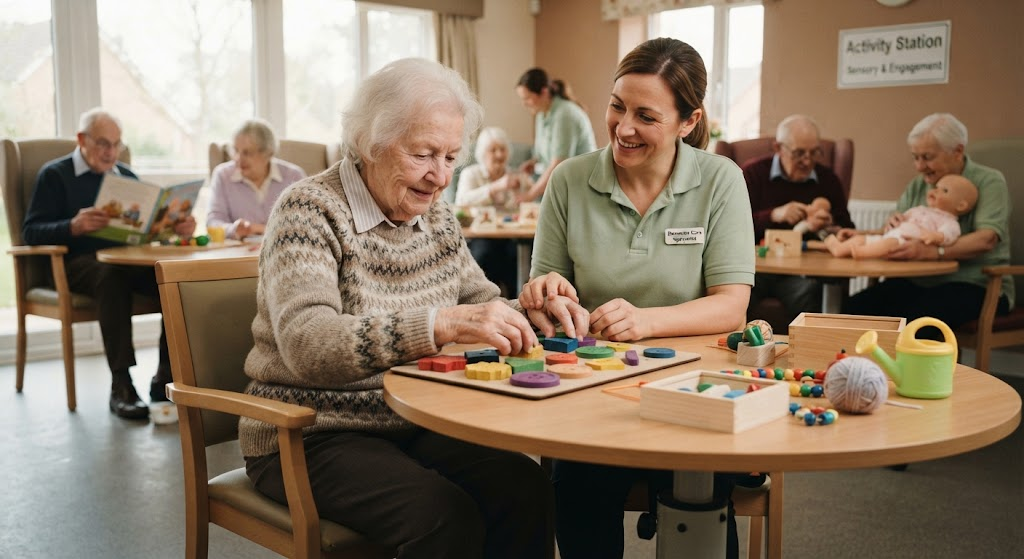
Meaningful activities can play an important role in dementia care by supporting emotional well-being, social connection, and a sense of purpose. From creative hobbies to familiar daily routines, suitable activities can provide comfort and engagement while respecting individual abilities, preferences, and needs.
Meaningful Activities That Support Dementia Care
Meaningful activities can encourage Cognitive stimulation, movement, social connection, and emotional comfort. They do not cure dementia or replace medical care, but appropriate engagement may ease boredom and support Emotional well-being.
Activity Choices That Reflect Ability
Begin with what the person can do now and what they have enjoyed before. A familiar interest can make participation easier, while simplifying steps helps prevent an activity from feeling like a test.
Music, folding towels, watering plants, and looking through photographs can draw on long-term or procedural memory. Reminiscence therapy uses meaningful objects, images, and stories to invite connection without insisting that every detail be remembered correctly.
Activity Signals That Guide Caregivers
Relaxed posture, a smile, humming, eye contact, or reaching for materials may indicate interest, even when conversation is limited. If the person becomes distressed, pushes items away, or tries to leave, pause and offer a different option later.
Engagement—not a finished product—is the measure of success. A brief, enjoyable moment can be more valuable than a long session that creates pressure.
Activity Ideas Matched to Dementia Stages
Abilities and preferences vary, so stages offer guidance rather than fixed rules. These options can be adjusted in response to the person’s comfort and attention.
Activities for Earlier and Middle Stages
In earlier stages, familiar games, gentle exercise, and creative choices may help maintain independence. As tasks become harder, use one step at a time and draw on well-practiced movements rather than introducing complicated instructions.
- Games and puzzles: Try dominoes, simple card games, or puzzles with large pieces and familiar images.
- Creative activities: Offer flower arranging, watercolor painting, adult coloring, or a collage made with easy-to-handle materials.
- Household tasks: Invite participation in folding towels, sorting cutlery, wiping a table, or watering plants.
- Social engagement: Consider a quiet coffee with friends, a small family gathering, or a dementia-friendly community activity.
These ideas can be adapted to personal interests; more guidance on personalized activities for older adults can help inform that process. Short sessions and familiar surroundings often make participation more manageable.
Activities for Later Stages
When communication or mobility is significantly affected, sensory comfort and companionship may take priority over task-based activities. Soft music, a warm blanket, gentle hand massage, reading aloud, or sitting outside can offer calm without requiring a response.
Use touch only in ways the person appears to welcome, and keep sound and stimulation comfortable. Familiar faces, scents, and songs may still provide a reassuring point of connection.
Daily Routines and Personalized Engagement
Predictable Daily routines can make activities easier to anticipate, but flexibility remains essential. Energy and attention fluctuate; late morning may suit an engaging task, while a quieter activity may fit better later in the day.
Routine, Safety, and Choice
Offer simple choices, such as music or a photo album, and allow plenty of time. Avoid quizzing, correcting mistakes, or using activities that feel childish; familiar adult roles and meaningful contributions help protect dignity.
A small collection of ready-to-use materials can make it easier to respond to changing interests. Useful options include printed photographs, large crayons, soft textured items, a simple puzzle, and a prepared playlist.
Connection Beyond the Activity
Technology can support connection when it is easy to use: a slideshow of family photographs, familiar recordings, or a brief video call may be more accessible than a complex app. Keep devices simple and provide support rather than leaving the person to troubleshoot.
Caregivers can also explore ideas for activities that encourage cognitive engagement and well-being in later life, then adapt them to the individual. When safety, mobility, swallowing, or distress is a concern, consult a healthcare professional or occupational therapist for personalized guidance.
Activity planning is most effective when it reflects what the person enjoys and can comfortably manage; professional advice can help tailor choices as needs change.