
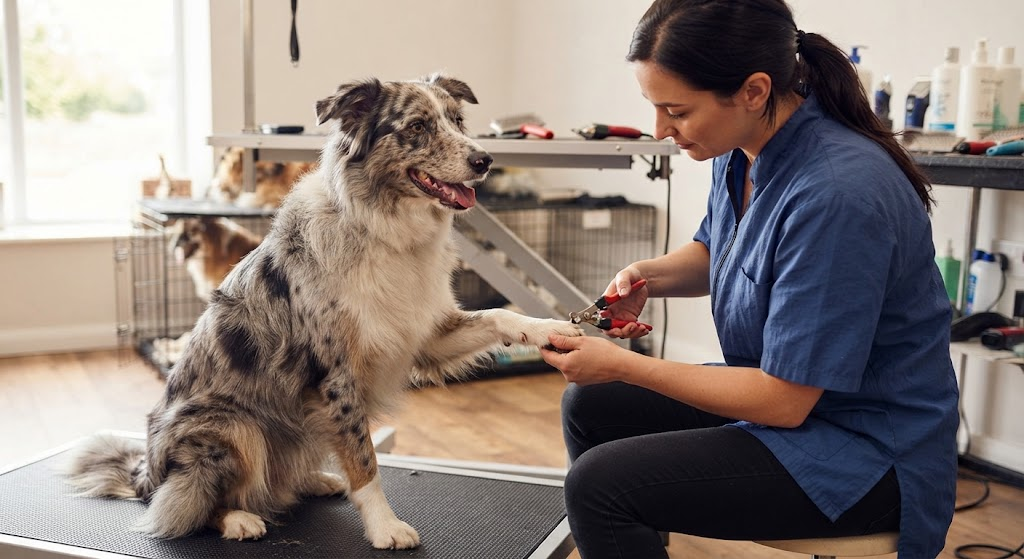
Dog nail care for active dogs cannot be reduced to a single calendar rule: exercise habits, walking surfaces, age, and individual nail growth all affect how quickly claws wear down. Concrete may naturally shorten nails, while grass, trails, and indoor flooring offer less abrasion, so two dogs with similar routines can still need different paw maintenance. Regular checks help keep nail length from changing how a dog stands or moves.
Exercise Habits and Natural Nail Wear
Before setting a trimming routine, consider where activity takes place. Exercise can help file nails naturally, but its effect varies with surface, gait, and the individual dog.
Walking Surfaces and Nail Length
Frequent movement on concrete or asphalt often creates more abrasion than walks on grass, carpet, or soft woodland paths. This may reduce how often some active dogs need a full trim, but it does not guarantee that every nail wears evenly; dewclaws and nails on less-loaded toes may remain long.
Running, Hiking, and Paw Health
Running and hiking add varied movement, yet rough terrain can also expose paws to cracks, breakage, or soreness. Check the pads and nails after demanding outings, and avoid treating natural wear as a substitute for inspection. Healthy paws depend on both appropriate exercise and routine observation.
Lifestyle-Based Dog Nail Care Schedules
Use general intervals as a guide, then adjust according to what the nails and paws show. The following ranges are starting points rather than fixed prescriptions.
| Dog’s routine | Typical check or trim interval | What to monitor |
|---|---|---|
| Mostly indoors or on soft surfaces🐾 | Check weekly; trim about every 2–4 weeks as needed ✂️ | Ground contact and clicking
🐕
|
| Regular outdoor activity ✂️ | Usually every 3–6 weeks 🐾 | Uneven wear and long dewclaws 🐶 |
| Puppy 🐶 | Check weekly; small trims often every 2–3 weeks 🐶 | Comfort with paw handling🐾 |
| Senior or less mobile dog 🐕 | Often every 2–4 weeks 🐕 | Posture, mobility, and nail length ✂️ |
Indoor and Low-Activity Dogs
Dogs with little exposure to abrasive surfaces often need more frequent maintenance because their nails receive less natural filing. If nails touch the floor while the dog stands or make a repeated clicking sound, assess them rather than waiting for the next planned appointment.
Puppies and Senior Dogs
For puppies, gentle weekly handling helps make future care more familiar; remove only small amounts when trimming is needed. Older dogs may wear their nails down less through reduced movement, and long claws can aggravate discomfort or altered posture, particularly when joint disease is present. Age changes the monitoring needs, even when nail growth itself has not accelerated.
Safe Nail Trimming for Active Dogs
Once the routine is clear, technique should prioritize gradual progress and a calm experience. The quick—the inner tissue containing blood vessels and nerves—makes cautious trimming especially important.
Tools and Gradual Technique
Clippers remove nail in a single cut, while a grinder allows gradual filing and can leave a smoother edge. With dark nails, the quick is harder to see, so take very small amounts from the tip and pause frequently. Avoid trying to shorten severely overgrown nails in one session; regular, conservative trims are safer.
Handling, Comfort, and Warning Signs
Introduce paw handling and tools in brief sessions, rewarding calm cooperation. Stop if the dog becomes distressed or struggles enough to risk injury, and seek help from a groomer or veterinarian when safe handling is difficult. Arrange veterinary assessment for persistent pain, a split nail, bleeding that does not stop, swelling, or a claw growing into the paw pad.
Keep these practical checks in the dog’s regular paw maintenance routine:
- Listen for nails clicking on hard floors and check whether they touch the ground at rest.
- Inspect every claw, including dewclaws, after long runs or hikes.
- Trim small amounts with suitable, sharp tools rather than making deep cuts.
- Pause and consult a professional if a nail is painful, damaged, or difficult to manage safely.
Consistent checks tailored to exercise habits help keep nails from affecting a dog’s stance and stride. A veterinarian or qualified groomer can assess individual nail length and recommend an appropriate care routine.


