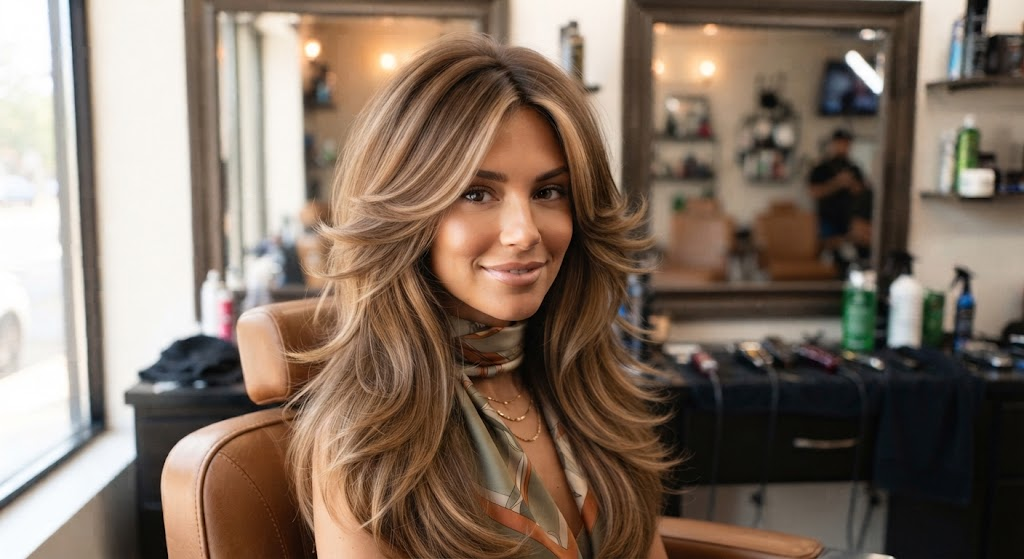
Layered haircuts can create visible movement while preserving the length that makes long hair so versatile. The result depends less on how many layers are cut than on where they sit: carefully placed graduation can release weight, add lift, or soften the outline without leaving the ends looking sparse.
Layered Haircuts That Preserve Length And Create Movement
The most subtle options keep the perimeter long and concentrate shaping through the mid-lengths, ends, or area around the face. These cuts suit anyone seeking hair movement without a dramatic change in overall length.
💇♀️Face-framing layers offer a smaller adjustment: shorter pieces around the cheeks or jaw create shape near the face while the rest remains long. Soft layers can also form a waterfall effect, with each length flowing smoothly into the next. For a cohesive look, the shortest pieces should connect naturally with the longer sections.
Before choosing a cut, it helps to match the layering technique to the desired result:
- For fine hair: Keep the ends relatively full and ask for subtle or internal layering.
- For thick hair: Remove weight from inside the shape while maintaining a strong perimeter.
- For curls: Shape layers around the natural curl pattern and account for shrinkage.
- For visible framing: Choose face-framing layers that blend into the overall length.
Haircut Shapes For Different Textures And Lengths
Once the desired amount of movement is clear, the haircut’s overall shape determines how that movement appears. The same layering method can create a polished silhouette, a fuller crown, or a deliberately tousled finish.
Long Layered Haircut Variations
Butterfly layers pair shorter crown pieces with longer lengths beneath, producing lift and face-framing volume while retaining the appearance of long hair. A curtain-layer shape extends that framing into the sides, while a center part emphasizes symmetry and a deep side part directs more volume toward one side.
For a relaxed, more defined textured haircut, a modern shag uses choppier layers throughout. Feathered layers, by contrast, sweep away from the face and create a softer, retro-inspired outline. Feathered ends can add movement, but razor-cut or heavily thinned ends may look too sparse on fine hair.
Medium And Short Layered Haircut Variations
A layered bob or collarbone-length cut gives shorter hair motion without relying on long lengths. Internal layers can keep a lob’s perimeter looking nearly blunt while easing heaviness inside; a stacked A-line bob adds shape at the back and keeps longer pieces toward the front.
Curly hair benefits from layers that follow the curl pattern rather than imposing a straight, uniform shape. Because curls spring up as they dry, a stylist experienced with curls can assess the natural fall and preserve balanced proportions.
| Hair Goal
✂️
|
Layering Approach
✂️
|
Styling Consideration
✂️
|
|---|---|---|
| Fuller-looking fine hair | Subtle layers with dense ends | Lift at the roots; avoid excess thinning |
| Lighter thick hair | Internal weight removal | Retain a full outer outline |
| Defined curly shape | Pattern-led, curl-aware layers | Allow for shrinkage when dry |
| Polished long hair styling | Long or face-framing layers | Use a round brush for soft bends |
Styling Choices That Show Layered Hair Movement
Cutting establishes the shape, while styling reveals how each section moves. A round-brush blowout can lift the crown and turn the ends; air-drying with a light texturizing product gives shags and waves a more relaxed finish.
For a smooth look, a small amount of smoothing product helps control flyaways without weighing down the layers. For naturally wavy or curly hair, suitable curl products can support definition and reduce frizz. The best layered haircuts work with the hair’s natural behavior, so discuss texture, density, and everyday styling time with a professional stylist before deciding where the layers should begin.