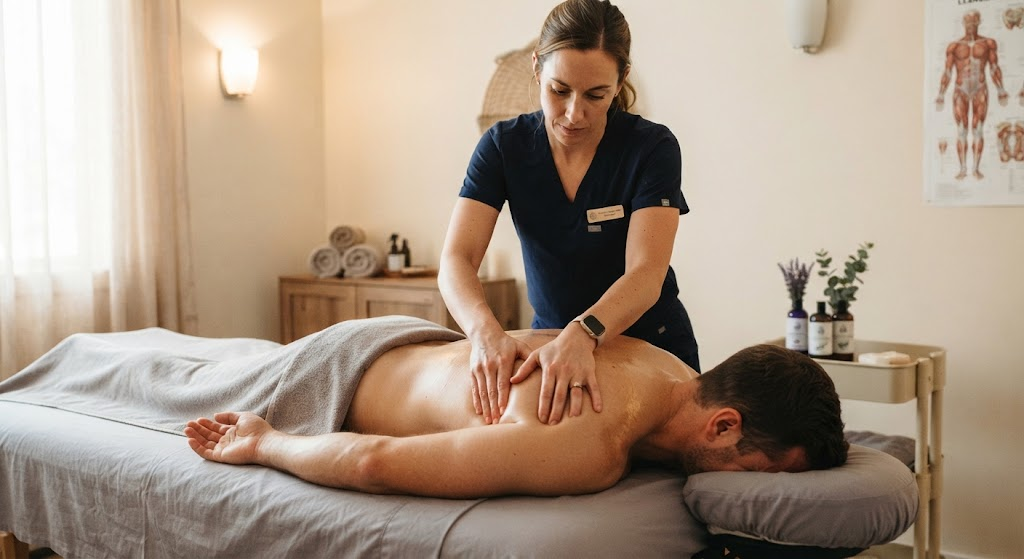
Clinical massage therapy applies anatomy-informed assessment and manual techniques to specific musculoskeletal concerns rather than following a fixed, full-body routine. By examining movement, tissue sensitivity, and the pattern of discomfort, a therapist can plan targeted muscular care that supports mobility and comfort. Its role is best understood as one part of an individualized care plan, with appropriate referral when symptoms require medical assessment.
Assessing Clinical Massage Therapy Needs
A targeted session begins with a conversation and physical assessment, not simply with pressure. Health history, symptom behavior, movement, and the client’s goals inform decisions about technique, intensity, and whether massage is appropriate.
Evaluating Movement And Soft Tissue
Observation of posture and range of motion, together with careful palpation, can help identify tenderness or restricted movement. Assessment findings guide soft tissue treatment, while also helping the therapist recognize limits: massage practitioners do not diagnose medical conditions, and unexplained, severe, or worsening symptoms warrant evaluation by a qualified healthcare professional.
Planning Individualized Care
A treatment plan should be adjusted to the person’s comfort and response rather than applied as a standard recipe. The therapist can explain the intended approach, obtain consent, and check pressure throughout the session; these steps make care more precise and support informed participation.
Applying Targeted Muscular Care Techniques
Once assessment identifies appropriate goals, a therapist may combine methods instead of relying on one technique. Pressure, pace, and positioning should be adapted to the area treated and the client’s response.
Using Focused Manual Methods
Gentle gliding strokes may prepare tissues for more focused work. Trigger-point approaches apply controlled pressure to sensitive areas, while myofascial release uses sustained, measured contact to address movement restrictions in connective tissue. These methods can be included in therapeutic massage, but their effects vary and should not be presented as guaranteed or as a replacement for medical care.
Adapting Pressure And Stretching
Deep pressure is not automatically more effective. Positional release, comfortable range-of-motion work, or proprioceptive neuromuscular facilitation (PNF) stretching may suit some goals, while lighter contact or avoiding a region may be more appropriate in other circumstances. Clear feedback helps the therapist modify the session before discomfort becomes excessive.
For context on how massage fits alongside other approaches, see this overview of chronic pain treatment options and functional recovery.
Coordinating Massage With Recovery Care
Massage may complement rehabilitation by supporting comfort and movement, but recovery often depends on a broader plan. Communication with relevant healthcare professionals can clarify how manual care fits with exercise, medical treatment, or activity modification.
Supporting Pain Management And Rehabilitation
For muscle discomfort associated with overuse or rehabilitation, treatment goals may include easing perceived tension and making movement more comfortable. Massage can be considered alongside physical therapy or other services; this comparison of recovery-focused care modalities offers additional context. Persistent pain, new weakness, numbness, or symptoms following significant injury should be assessed by a clinician.
Tracking Response Over Time
Brief follow-up questions about comfort, function, and symptom changes help determine whether the approach remains suitable. A useful plan may include reassessment and coordination rather than simply repeating the same session. Massage supports care most responsibly when outcomes and limitations are discussed openly.
Selecting Safe Clinical Massage Therapy
Training, communication, and professional boundaries shape the quality of targeted care. Before beginning, clients can discuss relevant considerations such as recent surgery, medication, skin conditions, pregnancy, or a diagnosed health concern.
Confirming Training And Consent
Practitioners should have appropriate education and comply with local licensing or regulatory requirements. A competent therapist explains the planned techniques, respects consent, and modifies or stops treatment when needed. These safeguards matter as much as technical skill.
Massage is not appropriate for every symptom or situation. A therapist should recommend medical evaluation when findings fall outside their scope, and coordinate with a clinician when the client’s care plan calls for it. For individualized advice, consult a qualified healthcare professional or licensed massage therapist.