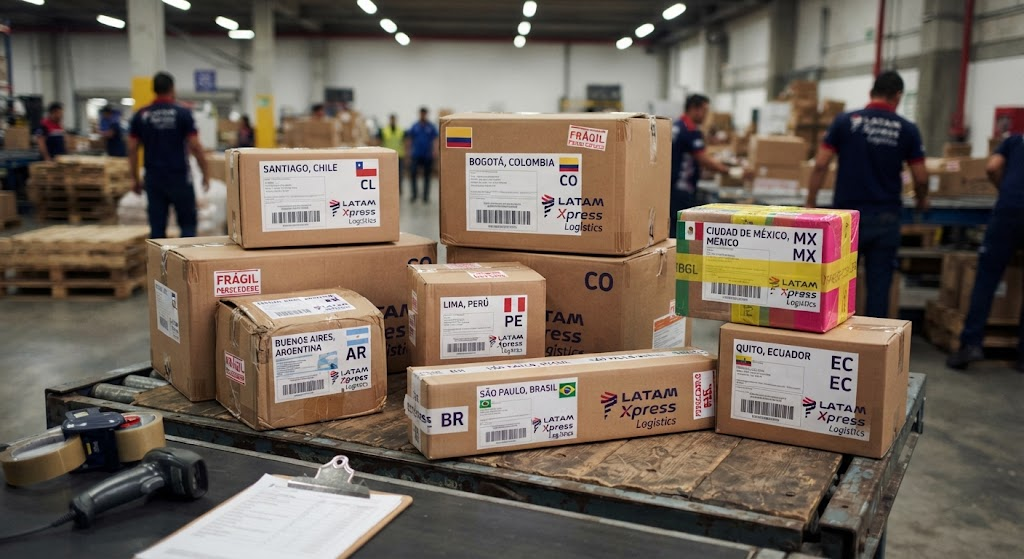
Export packaging for Latin America must withstand more than distance: repeated handling, humid climates, varied road conditions and country-specific import procedures can all affect a shipment. A box that performs well in a domestic network may fail during a long multimodal journey, while unclear product labeling or incomplete paperwork can slow customs clearance. Effective planning therefore connects packaging design with transport routes, cargo protection and destination requirements from the outset.
Packaging Design For Latin America Shipping
Packaging design should reflect the full transport chain rather than the first leg alone. Sea freight may involve prolonged exposure to humidity, while road or rail connections can add vibration, impact and repeated transfers.
Product Protection And Transport Durability
Start by assessing the product’s weight, fragility, dimensions, sensitivity to temperature and tolerance for compression. Select a suitable outer container, internal cushioning and closure system, then verify that the assembled package can withstand expected stacking and handling forces.
Moisture protection deserves particular attention for ocean freight and routes through tropical or rainy regions. Use appropriate liners, sealed barriers or desiccants where the cargo requires them, and ensure that protective materials do not trap condensation around moisture-sensitive goods.
Material Selection And Cargo Security
Corrugated cartons can suit many lighter products, while heavy or high-value goods may require reinforced boxes, crates or protective inserts. Materials should resist puncture and compression without adding unnecessary bulk that complicates handling or container use.
Cargo security also depends on tamper-evident closures, discreet external markings and secure internal placement. For regulated or sensitive goods, packaging should prevent leakage or access during transit and remain compatible with the product’s safety requirements.
Palletization And Container Loading
Once individual packages are prepared, their arrangement determines how effectively the shipment uses space and resists movement. Palletization and container loading should be planned together, especially when cargo will pass through several handling points.
Load Stability And Palletization
Build stable, square loads with heavier items at the bottom and avoid overhang that can expose cartons to impact. Stretch wrap or strapping should secure the load without crushing the packaging, and the pallet must be suitable for the cargo’s weight and handling method.
Before shipping, confirm any destination or carrier requirements for wood packaging. Where applicable, wood packaging materials must meet the relevant phytosanitary rules, including ISPM 15 treatment and marking, to reduce the risk of border delays.
Container Loading And Route Conditions
Distribute weight evenly, secure cargo against shifting and leave no unstable voids between loads. Consider the container’s expected journey, including changes in temperature and humidity, as well as the sequence in which goods may be unloaded.
The following checks help link package design to loading practice and destination readiness:
- Confirm package dimensions, gross weight and stacking limits before building pallet loads.
- Use blocking, bracing or other appropriate restraints to limit movement in transit.
- Check that labels and handling marks remain visible after wrapping and loading.
- Photograph completed loads and retain packing records for shipment documentation.
Packaging Regulations And Customs Compliance
Physical protection is only part of shipment readiness. Packaging regulations, import rules and documentation requirements vary across Latin American destinations, so exporters should verify the rules for each country and product before dispatch.
Product Labeling And Destination Requirements
Product labeling may need to identify the goods, origin, quantity, handling conditions or other information required by local law. Language, format and placement can differ by product category, so confirm the applicable requirements with the importer or a qualified trade professional rather than relying on a generic label.
Packaging itself may also be subject to environmental, recycling or producer-responsibility rules. These obligations can change by jurisdiction and material type; checking them before production helps avoid relabeling, repacking or rejected consignments.
Documentation And Compliance Checks
Align the package markings with the commercial invoice, packing list and transport documents. Product descriptions, quantities, weights and identification numbers should agree across records, because discrepancies can prompt inspections or delay release.
A practical pre-shipment review should cover the following areas:
- Destination-specific packaging and labeling rules for the product category.
- Wood packaging treatment and marking requirements, where applicable.
- Consistency between physical labels and customs documentation.
- Import permits, certificates or handling restrictions that affect packing.
Shipment Readiness For Latin America
Reliable export packaging combines product protection, stable loading and accurate compliance checks. These elements work best when reviewed as one process, from material selection through final container inspection.
Because destination rules and cargo risks differ, exporters should consult a qualified packaging engineer, freight forwarder or customs specialist for shipment-specific guidance. Their assessment can help ensure that packaging choices match the route, product and import requirements.