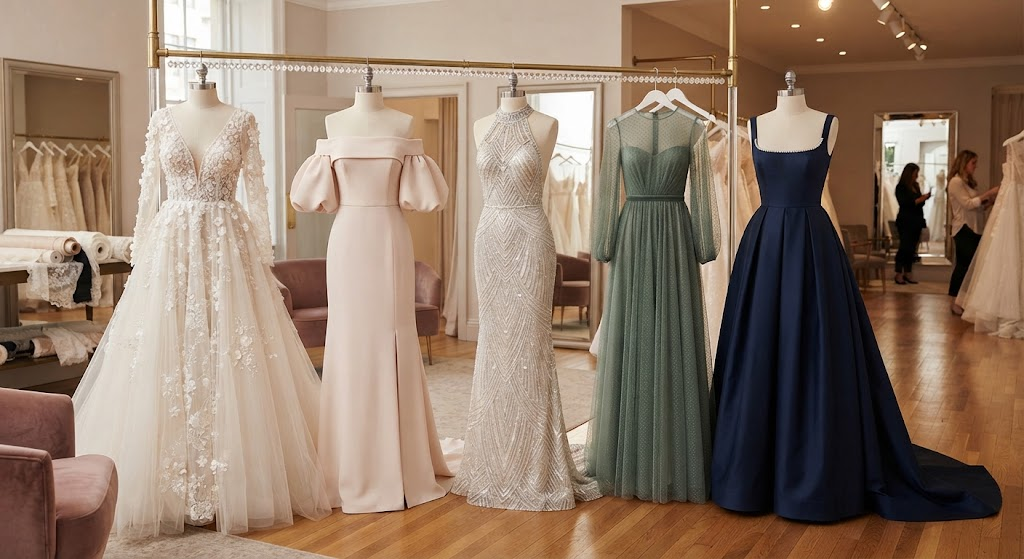
Elegant formal dresses are defined not by ornament alone, but by the relationship between neckline, sleeves, fabric, and silhouette. Each element influences proportion, movement, comfort, and the level of formality, so thoughtful coordination matters as much as the design itself. Understanding how these details work together makes it easier to choose a gown suited to the occasion, dress code, and season.
Neckline Choices For Elegant Formal Dresses
A Neckline frames the face and shoulders, shaping the overall character of a dress. It also affects how jewelry sits and where the eye is drawn, making it a useful starting point when comparing formal styles.
Neckline Shapes And Their Effects
A V-neck creates a long vertical line, while a boat neckline emphasizes the shoulders with a broad, balanced sweep. A high neckline offers a more covered finish and can make intricate fabric details, such as embroidery or beading, especially visible.
Off-The-Shoulder Proportions
An Off-the-shoulder design highlights the collarbone and pairs naturally with an updo or understated earrings. Because the neckline relies on a secure bodice, careful fitting helps prevent slipping and allows comfortable movement throughout an event.
For weddings and other celebrations, the venue and dress code can guide the choice: a formal ceremony may call for more coverage, while an evening reception may welcome a more open cut.
Sleeve Designs For Formalwear
Sleeves change both the coverage and visual balance of a gown. Their length and construction can soften a structured bodice, add movement, or provide warmth without requiring an additional layer.
Long-Sleeved And Three-Quarter Styles
Long-sleeved dresses suit cooler venues and occasions with more conservative dress codes. Sheer mesh or lace can keep the look light, whereas opaque sleeves create a cleaner, more architectural line.
Short And Statement Sleeves
Short sleeves and cap sleeves provide coverage while leaving the arms largely unrestricted. Bell or flutter sleeves introduce motion, so they often work best with a simpler bodice and skirt that allow the details to remain in focus.
When assessing sleeve fit, check the shoulder seam, armhole, and ease of movement rather than length alone. A sleeve that pulls when the arms are raised can limit comfort, while excessive fabric may disrupt the gown’s intended silhouette.
Fabric Performance And Formal Dress Silhouette
Fabrics determine how a dress drapes, reflects light, and responds to movement. Their weight and texture should complement the intended Silhouette: a fitted column typically benefits from controlled structure, while a full skirt needs enough body to hold its shape.
Lace, Satin, And Chiffon Characteristics
Lace brings dimension through its openwork pattern and can appear as an overlay, sleeve detail, or bodice feature. Satin has a smooth surface and noticeable sheen, making precise tailoring and a well-fitted lining particularly important.
Chiffon is lightweight and fluid, often used in layered skirts or sleeves to create movement. As each material behaves differently, the lining, seams, and finishing details contribute as much to the final appearance as the outer fabric.
Fabric Selection By Occasion
Season, venue, and event duration help narrow the options. Consider these practical distinctions before making a final selection:
- Lace adds texture and works well as a focal detail or a full overlay.
- Satin offers a polished finish and a more defined drape.
- Chiffon provides lightness and fluid movement, especially in layered designs.
For a broader look at occasionwear, this overview of party dresses for different celebrations offers related styling context. A balanced choice aligns fabric weight, neckline, sleeves, and silhouette with the formality of the event.
| Design Element | Visual Effect | Practical Consideration |
|---|---|---|
| V-Neck | Creates a vertical line | Check depth and support |
| Long Sleeves | Adds coverage and structure | Allow comfortable arm movement |
| Satin | Reflects light with a smooth finish | Look for clean seams and fit |
| Chiffon | Moves lightly and fluidly | Consider lining and layering |
Neckline, sleeve construction, fabric, and fit work best as a coordinated system rather than separate details. For advice tailored to a specific dress code or alterations, consult a professional stylist or skilled dressmaker.