
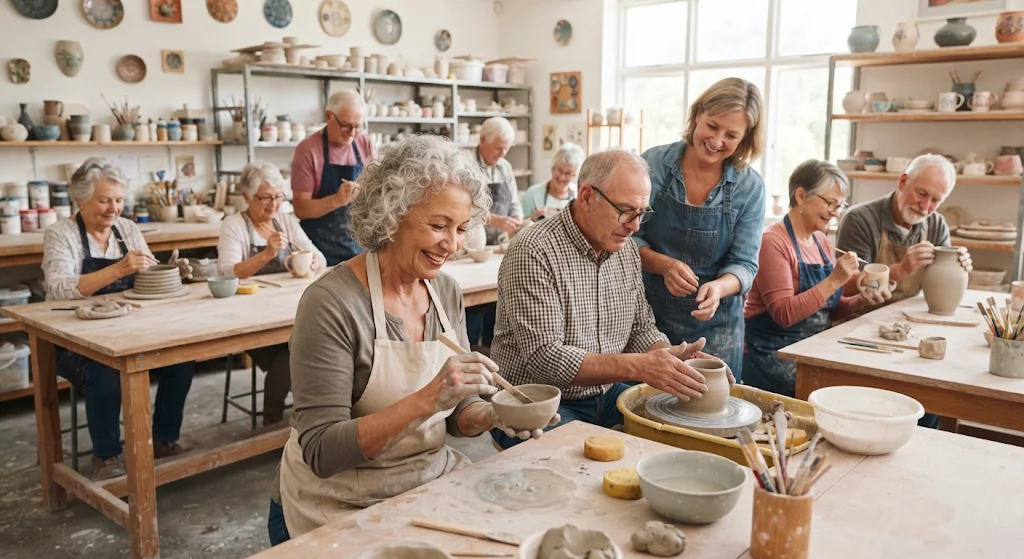
Pottery and ceramics classes for seniors bring together tactile creativity, practical learning, and social connection. From shaping a first pinch pot to exploring the pottery wheel, older adults can choose a pace and format that suit their interests, mobility, and experience.
Benefits of Senior Pottery Classes
Senior pottery classes combine creative exploration with a structured activity. Kneading, pinching, and shaping clay involve fine hand movements, while planning a form and adjusting it as it develops can encourage focus and problem-solving. These activities are not medical treatment, but many participants value the calming rhythm and sense of accomplishment associated with making something by hand.
Group classes add a social dimension: learners can exchange ideas, observe different approaches, and celebrate finished work together. This connection can complement other recreational activities that support older adults’ well-being, without requiring previous artistic experience.
Class Formats and Ceramic Techniques
Course formats vary by venue and instructor. Community centers, senior clubs, continuing education programs, and independent studios may offer one-time workshops or regular sessions. A studio directory such as ClayDirectory can help locate pottery spaces across the United States; its listings are refreshed monthly using public place information and direct submissions, so confirm current details with each provider.
Before comparing options, it helps to understand the skills a class may cover and how they differ.
Hand-Building and Clay Sculpting
Hand-building pottery uses fingers and simple tools rather than a wheel. Pinch, coil, and slab methods let beginners create small vessels, tiles, or sculptural forms, and instructors can adapt tasks with larger tools or pre-rolled clay when appropriate. Clay sculpting offers a flexible route for learners who prefer free-form work.
Wheel-Throwing and Ceramic Glazing
Wheel-throwing introduces centering clay and shaping it as the wheel turns; it often takes practice and may involve repeated hand and arm movements. Ceramic glazing adds color and surface effects, followed by kiln firing, so learners should ask how instruction, materials, and firing are handled.
These approaches can be taught separately or combined in a single course. Watching a demonstration can help clarify which technique feels most appealing.
Choosing Ceramics for Seniors
A suitable class should explain its schedule, skill levels, studio access, and safety practices before enrollment. Ask whether the instructor can accommodate seated work, breaks, or modified tools, and check that pathways and work surfaces are easy to use. For wheel-throwing, learners may also want to discuss seating and physical demands in advance.
When assessing a class, these practical points can make the decision clearer:
- Look for beginner pottery instruction and a pace that allows time to practise.
- Ask about accessible seating, lighting, cleanup procedures, and ventilation.
- Confirm whether clay, tools, glazing, and kiln firing are included in the program.
- Choose between a small group, a senior art workshop, or a flexible online lesson.
Online tutorials provide convenience and can introduce techniques, though they cannot replace direct guidance around equipment or firing. In-person programs offer instructor feedback and shared studio routines; the best fit depends on access, learning preferences, and the type of work desired.
Safety and Therapeutic Pottery
Therapeutic pottery is sometimes used to describe the restorative qualities people associate with focused, hands-on making. The term does not mean every class is therapy; anyone seeking treatment should consult a qualified health professional. In a general learning setting, clear instructions, manageable projects, and regular pauses can help keep the activity comfortable.
Clay and glaze should be handled according to studio guidance, with particular care around dust, tools, and kiln areas. A well-run class explains these routines and adapts tasks where possible, allowing creativity to remain the focus. For more ideas on staying engaged, explore recreational activities that help seniors stay active.
Finding a Welcoming Pottery Class
Start with nearby community centers, art studios, senior programs, or continuing education listings, then contact the provider to verify current availability and accessibility. A brief conversation with the instructor can reveal whether the class welcomes newcomers and offers the level of support needed. Pottery becomes most rewarding when the setting feels safe, sociable, and suited to the learner.
| Class Option | Typical Focus | Best For |
|---|---|---|
| Community studio | Guided practice and shared equipment | Learners who value in-person instruction |
| Senior art workshop | Adapted group activities and social connection | Those seeking a welcoming peer setting |
| Online tutorial | Demonstrations and self-paced learning | People who prefer learning at home |
Whether the first project is a simple bowl or a sculpted ornament, a supportive class can turn curiosity into a lasting creative practice. Consult a qualified instructor about studio techniques and an appropriate healthcare professional for individualized guidance on physical needs.


