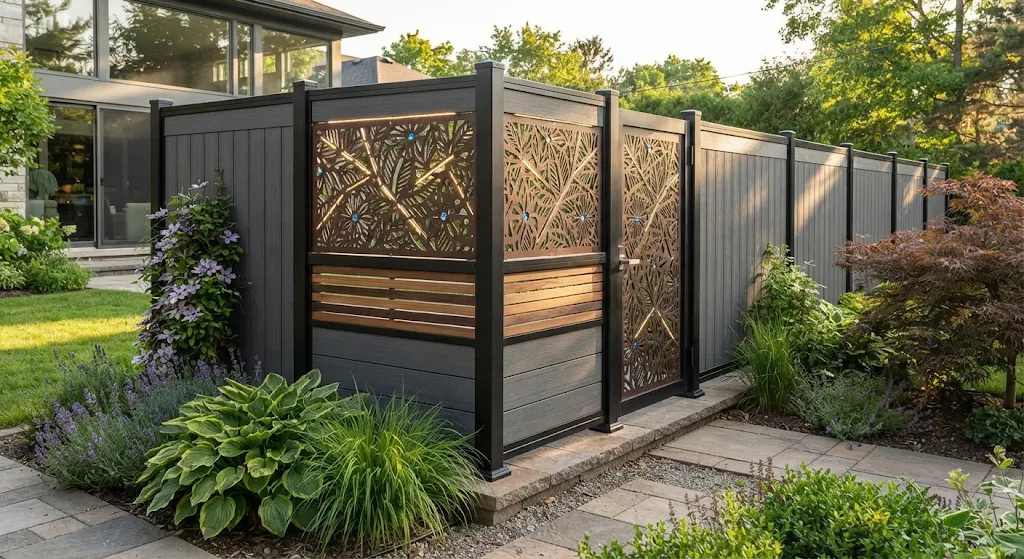
Privacy screens and decorative features can turn a boundary into an intentional part of a home’s landscape, balancing seclusion with light, airflow, and visual character. In a custom fence project, the choice of materials, spacing, height, and ornament determines whether the enclosure feels welcoming, architectural, or discreet. A well-planned design does more than block a view: it shapes how outdoor spaces are used and experienced.
Designing Privacy Screens for Outdoor Living
Privacy screens work best when they respond to the site rather than simply forming a solid barrier. Consider neighbouring windows, prevailing breezes, sunlight, and the activities taking place nearby; these factors help establish where screening is needed and how much openness to retain.
For outdoor privacy, fence panels can be solid, partially open, or arranged in sections with different levels of coverage. Horizontal slats, for example, create a contemporary rhythm while allowing some light and air to pass through. Their spacing and orientation also affect sightlines, so the design should be assessed from both sides of the fence.
Screening can also complement nearby windows and glazed doors. Coordinating these elements helps create a consistent approach to privacy without making the garden feel enclosed.
Balancing Decorative Fencing With Function
Decorative fencing adds visual interest through form, texture, and carefully chosen details. To make those features feel purposeful rather than ornamental additions, first consider how the fence relates to the building, planting, paths, and other materials on the site.
Choosing Ornamental Features and Materials
Ornamental features may include shaped rails, contrasting finishes, metal accents, or patterned inserts. Their scale matters: fine details can disappear across a large yard, while bold motifs may dominate a compact garden. Repeating one or two design elements elsewhere in the landscape creates cohesion.
Latticework offers a useful middle ground between a solid panel and an open boundary. It can support climbing plants and soften the fence line, though the amount of screening depends on the pattern and the foliage’s growth. Durable materials and suitable finishes also help preserve the appearance of these details as they face weather and regular use.
Decorative choices should remain compatible with local regulations, property boundaries, and maintenance needs. A fence that echoes the home’s architectural details can strengthen the overall composition, while an unrelated style may make the yard feel visually fragmented.
Selecting Fence Panels for a Cohesive Design
Once the visual direction is established, compare panel layout, material, and screening performance as a complete system. A custom fence design can combine solid sections where privacy is most important with more open treatments along garden views or less exposed boundaries.
Integrating Garden Screening and Latticework
Garden screening can define distinct outdoor areas, shelter a seating space, or conceal service zones without enclosing the entire property. Varying panel height or introducing a patterned section gives the boundary visual depth; transitions should remain deliberate, with consistent lines and complementary finishes.
Before settling on a layout, compare the main options against the needs of the space. The table below highlights how common approaches differ in privacy, light, and visual effect.
| Fence Treatment | Privacy Level | Design Effect |
|---|---|---|
| Close-set horizontal slats | High, depending on spacing | Clean, contemporary lines |
| Latticework panels | Moderate, with plant coverage | Open, garden-oriented texture |
| Solid fence panels | High | Simple, uninterrupted boundary |
| Mixed decorative sections | Varies by placement | Distinctive rhythm and detail |
For a practical design review, assess the site in daylight and from the viewpoints that matter most. These checks can clarify where screening is necessary and which features deserve emphasis:
- Map sightlines from windows, patios, and neighbouring properties.
- Check how panel height and spacing affect daylight and airflow.
- Coordinate finishes and details with the home and garden.
- Confirm boundary requirements and maintenance expectations.
Thoughtful planning makes privacy and decoration work together rather than compete. A fencing professional can assess site conditions, regulations, materials, and installation details to recommend a design suited to the property.