Warehouse painting in a high-ceiling facility is more than a cosmetic refresh: it can improve visibility, protect surfaces and help maintain a clean, professional environment. Because overhead work involves difficult access and large areas, careful product selection, surface preparation and coordination are essential.
Warehouse Painting Plans for High Ceilings
The most efficient time to paint is often before a warehouse is occupied. With aisles clear and equipment absent, crews can reach ceilings, walls, doors and floors more easily, while coatings have time to cure before operations begin.
In an active facility, sequencing matters. A contractor can coordinate work by zone, arrange access around shifts and keep designated routes clear, reducing interference with receiving, storage and dispatch. The right schedule depends on the building’s activity and the products selected.
Warehouse Access and Safety Equipment
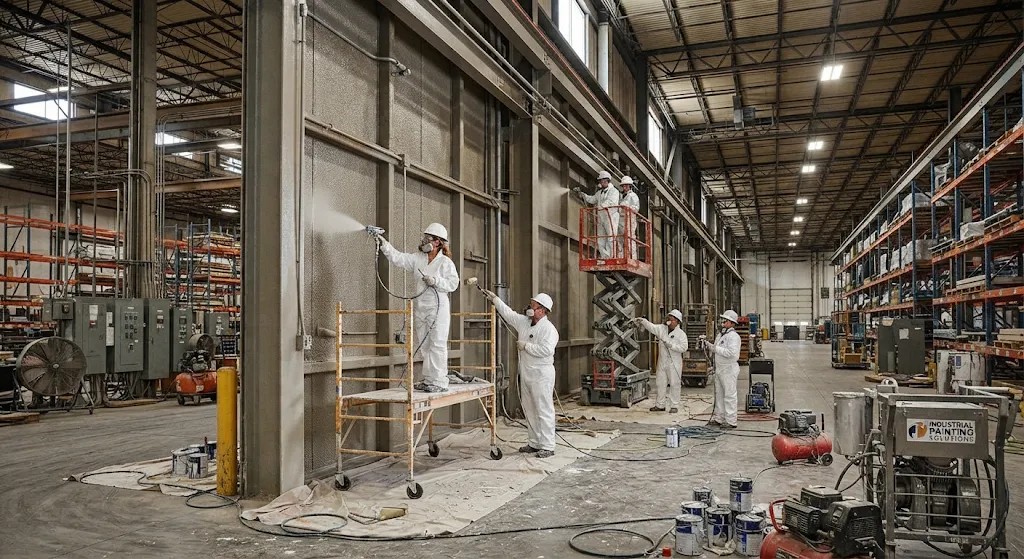
High work areas may require lifts or scaffolding, selected according to ceiling height, floor conditions and obstructions. Crews should use suitable safety equipment, follow site procedures and isolate active work zones to protect workers and nearby operations.
Spray painting can cover broad, open ceiling areas efficiently, but it requires careful masking and control of overspray. Occupied spaces may call for phased application or alternative methods where stored goods, machinery or ventilation systems could be affected.
Warehouse Surface Preparation
Coatings perform best on sound, clean surfaces. Surface preparation may include removing dust, addressing corrosion, repairing damage and checking existing finishes; skipping these steps can undermine adhesion even when a high-performance product is used.
Before work begins, agree on access, ventilation, protection of inventory and cure periods. These details turn a painting schedule into an operational plan.
Warehouse Coatings for Ceilings, Walls and Floors
Each surface faces different demands, so one coating rarely suits the entire building. Estimators should assess substrate condition, exposure, cleaning routines and the time available before the area returns to service.
The following options illustrate common choices; final specifications should follow the coating manufacturer’s guidance and site conditions.
| Surface | Common Option | Planning Consideration |
|---|---|---|
| Ceilings | Latex coating formulated for drywall, often with rust-inhibiting properties | Confirm substrate compatibility and coverage; some prepared surfaces may not require a primer. |
| Walls | Durable acrylic semi-gloss, eggshell acrylic or one-component acrylic epoxy | Choose according to cleaning frequency, impact exposure and desired finish. |
| Floors | Two-part epoxy or, where suitable, floor enamel | Epoxy requires cure time before forklift traffic; enamel may not offer adequate longevity for demanding use. |
Warehouse Ceiling Coating and Visibility
A suitable warehouse ceiling coating can refresh exposed structures and help make better use of available light when paired with an appropriate colour and finish. Product choice depends on the ceiling material and conditions; coatings intended for drywall may not suit metal or previously painted steel without different preparation.
Light-coloured surfaces can support a brighter appearance, but results also depend on fixtures, layout and maintenance. Colour charts and physical samples help assess how finishes look under the facility’s actual lighting.
Warehouse Floor Protection and Cure Time
Floors must withstand traffic, abrasion and cleaning. A two-part epoxy may suit demanding operational areas, while less durable enamel can be a poor fit where forklifts and frequent movement are expected.
Allowing the coating to cure is part of the work, not an optional pause. Confirm the manufacturer’s return-to-service guidance before reopening lanes or moving equipment.
Warehouse Safety Markings and Project Coordination
Clear markings can help define pedestrian routes, storage zones and equipment paths, supporting an orderly workplace. Their layout should align with the facility’s safety procedures and remain visible under normal lighting and operating conditions.
For an effective commercial painting plan, coordinate the following decisions before mobilization:
- Identify the areas that can be cleared and the zones that must remain operational.
- Set access, ventilation and inventory-protection requirements for each work phase.
- Match coatings to surfaces, exposure and cleaning needs.
- Confirm cure periods and safe conditions for resuming traffic.
Industrial painting in a high-bay warehouse succeeds when access, preparation, coating performance and operating schedules are planned together. A commercial painting professional can assess the facility and recommend a project sequence and products suited to its specific needs.