
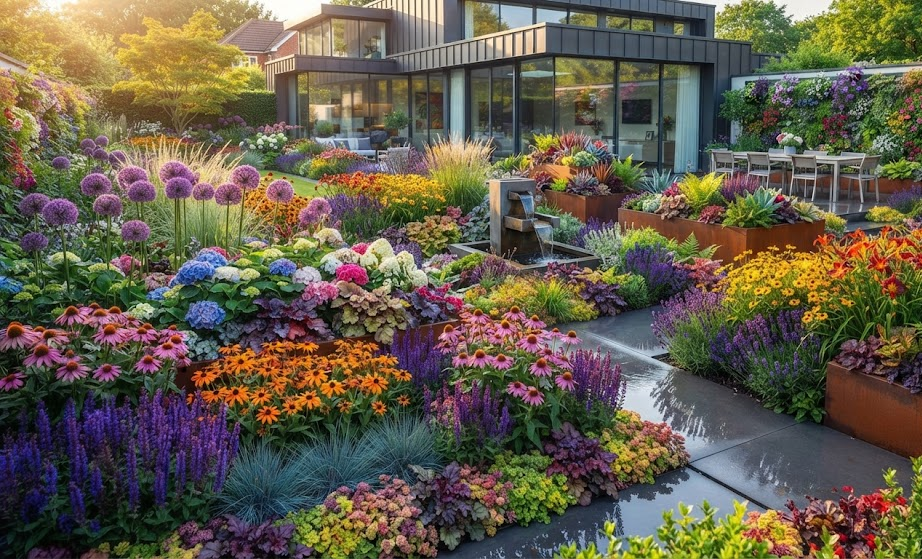
Creating a vibrant and dynamic garden that captures the essence of every season is an art that many gardeners aspire to master. Layering plants effectively allows for a constant interplay of colors, textures, and heights, transforming any outdoor space into a captivating landscape. By carefully selecting and arranging plants, you ensure a harmonious environment that thrives throughout the year.
Understanding Layered Landscaping for Seasonal Beauty
Layered landscaping is a method that blends various plants of different heights, colors, and textures to develop visually appealing gardens. This technique creates depth and interest, making sure that every layer contributes to the overall aesthetic. The success of this approach relies heavily on strategic positioning and a good grasp of the plants’ growth habits.
The Benefits of Layering Plants
Layering not only enhances visual appeal but also promotes healthier plant growth. Properly positioned plants receive optimal sunlight and moisture without competing against each other. Consider the following advantages of layered gardening:
- Year-round visual interest: By mixing perennials and annuals, you ensure that there are always blooms throughout the changing seasons.
- Wildlife support: A diverse plant selection attracts beneficial pollinators and wildlife, creating a more sustainable habitat.
- Efficient space usage: This technique maximizes the use of limited spaces, giving gardens a fuller appearance.
Implementing Layering Techniques in Your Garden
To create a stunning layered garden, understanding proper design principles is essential. By applying techniques around height, color, and texture, you can construct an appealing landscape that captivates the eye and holds interest throughout the seasons.
Height Considerations for Garden Structure
One key principle in layered landscaping is the consideration of plant height. Begin by placing taller plants at the back of the garden bed or in the center if it’s a round garden. This arrangement ensures that shorter plants in front are adequately illuminated. Here are some popular tall plants to include:
- Sunflowers (Helianthus annuus): Known for their towering presence and cheerful blooms, they can reach heights of up to 10 feet.
- Hollyhocks (Alcea rosea): These vertical beauties add charm and elegance, making them great companions for sunflowers.
- Common Lilacs (Syringa vulgaris): Their fragrant flowers draw attention and can grow between 8 to 10 feet tall.
Choosing Midground Plants for Balance
Midground plants are essential for creating balance within your layered garden. These plants should complement the taller species while providing texture and color. Consider these mid-sized gems:
- Poppy Anemone (Anemone coronaria): These charming flowers bring a splash of color and reach 1 to 3 feet in height.
- Common Foxglove (Digitalis purpurea): Known for their enchanting bell-shaped blooms, they can grow between 3 and 5 feet.
- Black-Eyed Susan (Rudbeckia species): With their vibrant yellow petals, they thrive in many garden settings.
Creating Ground Layering with Compact Plants
Groundcover plants play a vital role in completing the layered effect. These species fill spaces at the front and help prevent weed growth. Here are some excellent choices for foreground plants:
- Dichondra ‘Silver Falls’: This low-growing annual spreads gracefully, adding a delicate touch to garden edges.
- Dwarf Astilbe ‘Perkeo’: Known for its feathery blooms and attractive foliage, perfect for shaded areas.
- Groundcover Sedum: Easy to cultivate, these drought-resistant plants are ideal for filling gaps.
Incorporating Color and Texture for Depth
The interplay of colors and textures significantly enriches a garden’s aesthetics. Plant selection should be based on not just height but also the way plants will bloom through different seasons. Effective color pairing will enhance the layers:
- Choose contrasting colors to create vibrant displays, such as deep purples paired with bright yellows.
- Incorporate foliage of varying textures, combining broad leaves with finer, feathery ones for added interest.
- Implement seasonal planting strategies by including early bloomers alongside late-season flowers to keep your garden lively.
Maintaining Your Layered Garden for Continuous Growth
To ensure that your layered garden remains thriving throughout the seasons, maintenance is key. Regular care can substantially prolong the lifespan and beauty of your plants.
Key Maintenance Tips for Sustainable Growth
Here are valuable tips to maintain the vibrance of your layered plantings:
- Water adequately: Ensure proper moisture levels by watering deep but infrequently.
- Deadhead plants: Regularly remove spent blooms to promote new growth and extended flowering periods.
- Mulch the garden: Mulching can help retain moisture and suppress unwanted weeds, keeping your garden tidy.
Inspirational Ideas for Stunning Layered Gardens
Every gardener can find something that fits their style when exploring layered gardens. Here are a few design ideas that highlight the beauty of layering:
- Cottage Garden: Emphasizes a rustic charm with a mix of traditional blooms like roses and hollyhocks.
- Wildlife-Friendly Space: Focuses on native plants that attract pollinators and create a lively ecosystem.
- Modern Minimalist: Utilizes a clean palette and architectural plants to create a sophisticated ambiance.
Layering plants is an ingenious approach to foster a visually appealing and resilient landscape. By embracing these techniques, gardeners can cultivate an ever-evolving garden that delights throughout the seasons.


