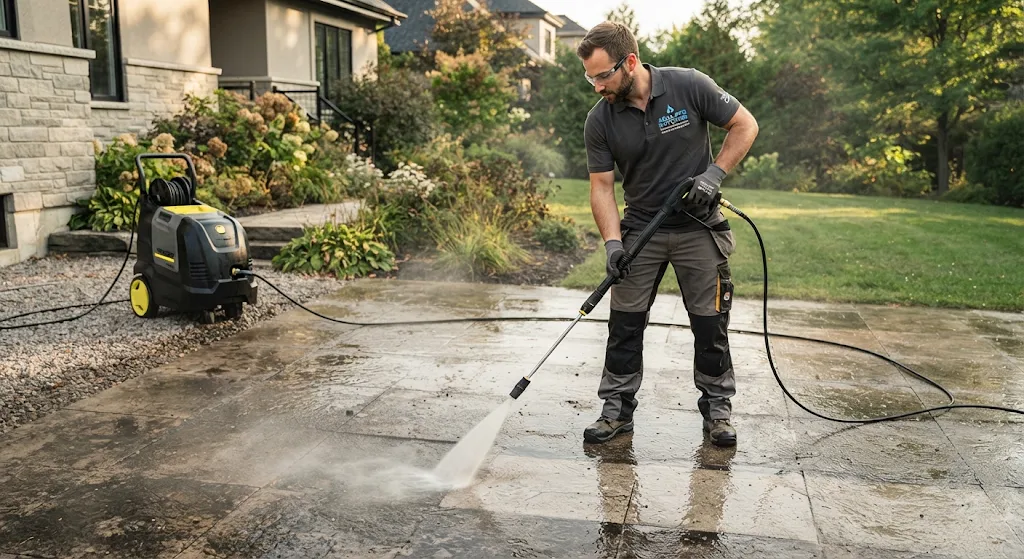
Water pressure can transform a rinse into an effective cleaning method, but the same force that lifts grime from concrete may strip paint or scar wood. The best results depend on matching pressure and water flow to the surface, then choosing a suitable nozzle, cleaning solution, and working distance. Understanding these factors makes pressure washing safer and more efficient across hard surfaces and delicate materials alike.
Water Pressure and Cleaning Effectiveness
In a pressure washer, a pump moves water through a hose and nozzle, controlling both pressure, commonly measured in PSI, and flow rate, often measured in gallons per minute. Pressure helps loosen stubborn deposits; flow carries loosened soil away and covers the area. These forces work together, so a higher PSI does not automatically mean better cleaning.
For compact areas with embedded grime or grease, stronger pressure and a more focused stream may help. Broad areas with light dirt are often cleaned more quickly with greater water flow and gentler pressure. Since many jobs combine both conditions, adjustable equipment lets the operator adapt as the surface and soil change. A useful overview of the method is available in this guide to pressure washing and its cleaning benefits.
Surface Materials and Appropriate Pressure Settings
Material condition matters as much as material type. Weathering, loose coatings, cracks, and previous repairs can make a surface more vulnerable, so pressure should be tested on an inconspicuous area before cleaning the full section.
| Surface | Cleaning approach | Main risk |
|---|---|---|
| Concrete | Moderate to high pressure; a rotating nozzle can speed work on sound, even areas. | Etching, uneven marks, or damage to weak joints. |
| Wood | Low pressure, a wider fan nozzle, and a consistent distance. | Raised grain, splintering, or stripped finish. |
| Painted siding | Gentle pressure and a broad spray directed away from seams. | Chipped paint or water forced behind panels. |
| Brick and mortar | Careful, moderate cleaning after checking mortar condition. | Erosion of soft or deteriorated joints. |
A narrow jet concentrates force, while a fan nozzle spreads it across a wider area. Rotating nozzles can be effective on durable concrete, but may be too aggressive for fragile coatings or masonry. Keeping the nozzle moving and maintaining a steady distance helps prevent streaking and surface damage.
Cleaning Techniques for Grease, Dirt, and Delicate Materials
Water alone may not dissolve oily residues. A compatible detergent can break down grease and oils, allowing a lower-pressure rinse to remove them with less risk to the underlying material. Always follow the equipment and product instructions, and avoid cleaners that could harm nearby plants or enter storm drains.
For delicate materials, begin with the lowest effective setting, a wide spray pattern, and greater nozzle distance. Test a small area, inspect the result, and adjust gradually rather than making a sudden jump in pressure. This measured approach often protects the finish while still delivering a thorough clean.
Weather also affects the process: wind can scatter spray and cause uneven results, while freezing conditions may leave water on surfaces or create hazards. Mild, calm weather gives better control. For broader exterior-maintenance context, see this explanation of high-pressure facade cleaning.
Equipment Checks and Safe Surface Cleaning
Before starting, inspect the washer, hose, connections, and nozzle for wear or blockage. Wear eye protection and gloves, keep the spray away from people and electrical equipment, and never use a focused jet on skin. These precautions reduce both injury risk and avoidable damage to the property.
A short preparation checklist helps keep the job controlled:
- Check hoses, fittings, and nozzles before connecting the water supply.
- Match pressure settings and nozzle choice to the surface material.
- Test the spray on a discreet area and maintain a consistent distance.
- Clean and dry equipment after use, storing it where it is protected from freezing.
Professional technicians can assess fragile finishes, complex drainage, or extensive buildup and select equipment suited to the site. Their experience is especially useful when cleaning effectiveness must be balanced with preserving older or vulnerable surfaces.