Bearing Materials for High-Speed and Heavy-Load Applications must reconcile demands that often pull in opposite directions: carrying intense forces while limiting friction, heat and vibration. Material selection is only part of the decision; bearing geometry, lubrication, fit and operating conditions all influence whether equipment runs reliably or wears prematurely. From motor-driven conveyors to turbines, machine tools and mining equipment, the right combination can support stable rotation and reduce unplanned maintenance.
Operating Demands for High-Speed, Heavy-Load Bearings
High load may involve substantial radial forces, axial forces or both. High speed raises centrifugal forces and frictional heat, while continuous operation subjects contact surfaces to repeated stress; together, these conditions can accelerate fatigue, wear and lubricant breakdown.
Selection should begin with the full operating profile rather than a single headline rating. The following factors help define what the bearing must withstand.
Load, Speed and Environment
Compare expected operating loads with the bearing’s dynamic rating, and account for static loads during stops, starts and shock events. Check the manufacturer’s limiting speed for the specific design and lubrication method; a general RPM figure cannot account for every arrangement or application.
Dust, moisture, chemicals and temperature also shape the choice. Seals can block contaminants, while shields may create less drag where speed is a priority. For conveyor systems, bearing selection should complement the wider duty cycle and maintenance plan, much like the operating requirements described in this guide to conveyor belt selection.
Bearing Materials and Performance Characteristics
Material affects fatigue strength, wear resistance, heat response and electrical behaviour. No single option suits every machine: the best choice depends on the combination of load, speed, environment and maintenance requirements.
These material groups offer distinct advantages, but their performance must be assessed as part of a complete bearing system.
Steel, Ceramic and Hybrid Options
Bearing steel, commonly through-hardened chrome steel, is widely used for its strength and dependable rolling-contact performance. Stainless grades can help where corrosion is a concern, although the exact grade and heat treatment should be checked against the application.
Ceramic bearings use ceramic rolling elements, often silicon nitride, which are lighter than steel and electrically insulating. These properties can help reduce centrifugal effects and protect against electrical erosion, but ceramic components are hard and comparatively brittle. Hybrid bearings combine ceramic balls with steel rings, offering a balance of low rolling-element mass and robust raceways for suitable high-speed motor applications.
Surface engineering, including specialized coatings, may improve friction or resistance to particular forms of damage, but it does not replace correct sizing or lubrication. Likewise, thermal stability and lubrication compatibility must be evaluated together: a material that tolerates heat is of limited value if the lubricant cannot maintain a protective film.
| Material or design | Typical advantage | Selection consideration |
|---|---|---|
| Bearing steel | Strength and broad industrial use | Check corrosion exposure and operating temperature |
| Ceramic rolling elements | Low mass and electrical insulation | Consider brittleness and system-level suitability |
| Hybrid construction | High-speed potential and electrical isolation | Verify load, fit and lubrication limits |
Bearing Types for Combined Loads and Speed
Material alone does not determine capacity. Internal geometry establishes how a bearing carries force, accommodates misalignment and manages contact at speed.
Common designs serve different operating patterns, so comparing the load direction with the required speed helps narrow the options.
Geometry for Specific Loads
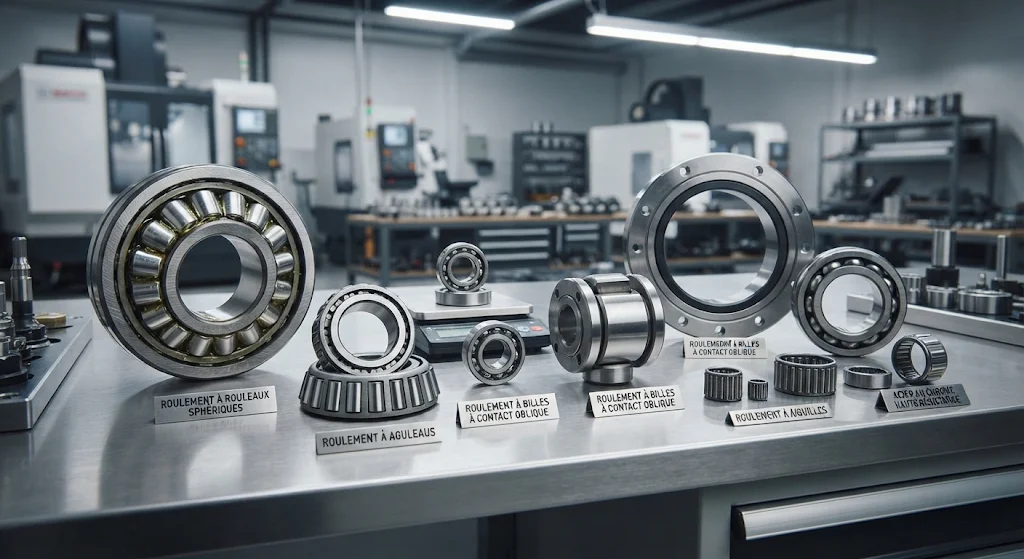
Angular contact ball bearings can handle radial and axial loads and are often used in precision spindles and motors. Cylindrical roller bearings provide substantial radial capacity, while tapered roller bearings suit heavy radial and axial loads at moderate speeds.
Spherical roller bearings tolerate some shaft misalignment and are used in demanding equipment such as mining conveyors and wind-energy systems. Deep-groove ball bearings offer versatility and low friction for moderate loads, but should not be assumed to suit extreme forces. For electrically driven machinery, consult specialists in electric motor servicing and repair when bearing damage may involve alignment, current or vibration issues.
Lubrication and Installation for Reliable Operation
Lubrication reduces friction, carries heat away and protects rolling contacts. Grease can simplify maintenance in many applications, whereas circulating or directed oil may provide better cooling in demanding high-speed equipment; the choice must match the bearing and its operating conditions.
Reliable performance also depends on careful assembly and monitoring. A practical checklist includes:
- Confirming the load, speed, temperature and contamination conditions against manufacturer data.
- Using the specified lubricant and replenishment interval, or an appropriate automatic system.
- Applying correct fits and preload to avoid creep, excess heat or unnecessary contact stress.
- Monitoring vibration, noise and temperature for changes that may indicate developing damage.
Precision mounting limits misalignment and vibration, while suitable seals help keep contaminants out without adding excessive drag. Monitoring trends can reveal lubrication or alignment problems before visible damage occurs, extending service life through timely intervention rather than reactive replacement.
Selection Priorities for Long-Term Bearing Performance
High-speed performance and heavy-load capacity depend on a coordinated choice of bearing type, material, lubricant and installation method. Verify ratings and operating limits with manufacturer documentation, especially when loads combine with heat, contamination or electrical exposure.
For application-specific guidance, consult a qualified bearing or motor specialist who can assess the complete assembly and recommend suitable materials and maintenance practices.